Strategies11 min read
Dealer Gamma, 0DTE, and Expiry Pin Risk Explained
Plain-language definitions of dealer gamma and 0DTE, how expiry can look like pinning, and a vendor-agnostic, invalidatable test you can run.
By TerraTrade Team
What we’re doing (plain definitions and a test)#
Publication date: 2026-09-23. This explainer defines dealer gamma/GEX and 0DTE in plain language, shows why expiry mechanics can look like pinning, and gives you a vendor-agnostic test with clear invalidation so you can decide whether these signals help your process—without hype. Factual notes on settlement, exercise style, and last-trade times are sourced directly to exchange/education materials The Facts About OptionsS&P 500 Index Options Product Specifications | CboeCboe® SPX® Index OptionsSPX Settlement Explained: AM vs PM, Cash Settlement, SPXW. Method framing for GEX references the original “Implied Order Book” paper The Implied Order Book.

Plain definitions: dealer gamma, 0DTE, settlement, and pin risk#
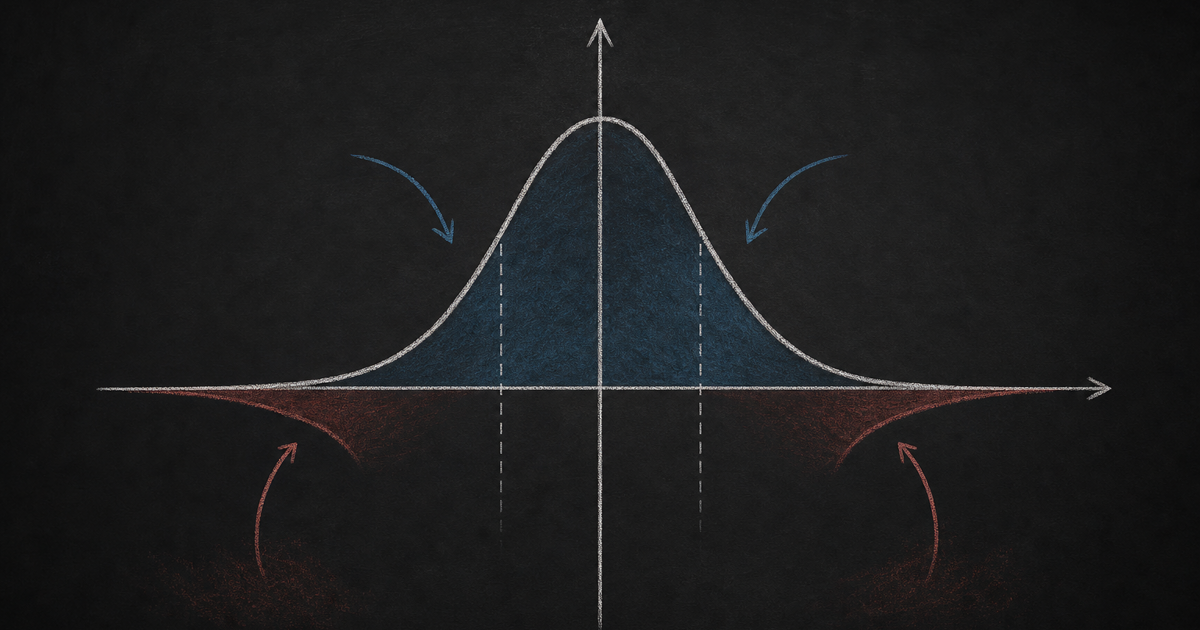
- Dealer gamma / GEX: A modelled, dollar-scaled sum of per-strike gammas (e.g., Black–Scholes gamma × open interest × contract multiplier, signed by a dealer-positioning convention). It estimates how much net delta dealers may need to buy or sell for a small move in the underlying. Positive net GEX is associated with hedging that tends to buy dips/sell rallies (dampening), negative with the opposite (amplifying). This framing comes from the SqueezeMetrics “Implied Order Book” white paper The Implied Order Book.
- 0DTE (zero days to expiration): Options that expire the same trading day. In U.S. indices this commonly refers to PM-settled daily/weekly SPX (SPXW) series that list expirations every trading day; they trade until 4:00 p.m. ET on expiry day and settle to the official close for PM-settled series S&P 500 Index Options Product Specifications | CboeSPX Settlement Explained: AM vs PM, Cash Settlement, SPXW.
- Exercise style and settlement type: SPX/SPXW index options are European-style (no early exercise) and cash-settled; no shares change hands at exercise S&P 500 Index Options Product Specifications | CboeCboe® SPX® Index Options. By contrast, most equity/ETF options are American-style and physically settled, where assignment typically creates or removes 100 shares per contract in the deliverable security The Facts About Options.
- Pin risk (operational idea): For physically settled American options, finishing right at a strike can create assignment uncertainty for shorts. For cash-settled European index options, there is no share assignment; instead, the single official settlement value determines in/out-of-the-money, and the official closing prices of index components set that value for PM-settled series S&P 500 Index Options Product Specifications | CboeSPX Settlement Explained: AM vs PM, Cash Settlement, SPXW.
| Underlying | Option class | Exercise style | Settlement | Last trading time on expiry | What determines the final settlement value | Operational “pin risk” context |
|---|---|---|---|---|---|---|
| SPX (PM-settled SPXW) | Index options | European (no early exercise) S&P 500 Index Options Product Specifications | CboeCboe® SPX® Index Options | Cash-settled S&P 500 Index Options Product Specifications | CboeCboe® SPX® Index Options | Trades until 4:00 p.m. ET on expiry day S&P 500 Index Options Product Specifications | Cboe | Official index close for PM-settled expiries S&P 500 Index Options Product Specifications | CboeSPX Settlement Explained: AM vs PM, Cash Settlement, SPXW | No share assignment; closing prices determine in/out-of-the-money at settlement S&P 500 Index Options Product Specifications | CboeSPX Settlement Explained: AM vs PM, Cash Settlement, SPXW |
| SPX (standard AM monthlies) | Index options | European S&P 500 Index Options Product Specifications | CboeCboe® SPX® Index Options | Cash-settled S&P 500 Index Options Product Specifications | CboeCboe® SPX® Index Options | Last trading is the day before; settle to SET from component opens S&P 500 Index Options Product Specifications | Cboe | SET value from component opening prices (next morning) S&P 500 Index Options Product Specifications | CboeSPX Settlement Explained: AM vs PM, Cash Settlement, SPXW | No share assignment; opening prices determine settlement S&P 500 Index Options Product Specifications | CboeSPX Settlement Explained: AM vs PM, Cash Settlement, SPXW |
| SPY (ETF options) | Equity/ETF options | American (early exercise possible) The Facts About Options | Physically settled (100-share deliverable is standard) The Facts About Options | See your exchange or venue rules for last-trade times. | Actual stock/ETF closing price determines ITM/OTM and assignment The Facts About Options | Assignment risk around the strike can create unintended stock positions The Facts About Options |
How expiry mechanics can resemble “pinning” without a conspiracy#
For PM-settled SPXW expiries, only one number decides whether an option finishes in- or out-of-the-money: the official index close. Options trade until 4:00 p.m. ET on expiry day, and the official closing prices of index components determine the final settlement value for PM series S&P 500 Index Options Product Specifications | CboeSPX Settlement Explained: AM vs PM, Cash Settlement, SPXW. If large open interest is concentrated at a nearby strike, hedgers and participants managing option exposure may transact into the close to reduce risk. Because the terminal payoff is fixed by that single print, flows can appear to “magnetize” price around a strike. That’s a visual resemblance to classic “pinning.” It does not prove intent — it’s a structural outcome of cash settlement and hedging around a single terminal mark S&P 500 Index Options Product Specifications | CboeSPX Settlement Explained: AM vs PM, Cash Settlement, SPXW.

A vendor‑agnostic test for dealer gamma and 0DTE pin risk (with invalidation)#
- Define scope in advance. Choose one underlying (for example, SPX index for SPXW options) and one expiry type (PM-settled dailies or weeklies). Fix your session time zone and cutoffs (open to 4:00 p.m. ET). Document everything before pulling data S&P 500 Index Options Product Specifications | Cboe.
- Data you need for each expiry day: per-strike open interest by put and call, option greeks (gamma) at a consistent snapshot time (for example, cash open), underlying price history, official close, and settlement rules for your series S&P 500 Index Options Product Specifications | CboeSPX Settlement Explained: AM vs PM, Cash Settlement, SPXW.
- Compute per-strike gamma exposure. For each strike and option type, estimate gamma using a standard model and multiply by open interest times contract multiplier, then apply your chosen dealer sign convention. Sum across strikes to obtain net GEX and a price-by-price gamma profile. This follows the implied-order-book framing The Implied Order Book.
- Define zero-gamma and gamma walls. Zero-gamma is the price where your aggregated gamma sign flips; gamma walls are local extrema in the absolute gamma profile. Record their levels from your morning snapshot The Implied Order Book.
- Define hypotheses before seeing the outcomes: H1 (dampening): On days with large positive net GEX at the open, realized intraday variance from open to close is lower than on days with small or negative GEX. H2 (pin-like closes): On PM-settled expiry days, the distance from the official close to the nearest top-3 open-interest strike is smaller than on non-expiry peers, especially when absolute GEX is large. H3 (flip risk): If price spends more than 50 percent of minutes on the negative-gamma side of the zero-gamma level, directional ranges expand versus days on the positive side The Implied Order BookS&P 500 Index Options Product Specifications | CboeSPX Settlement Explained: AM vs PM, Cash Settlement, SPXW.
- Pre-register invalidation. For example: if, over a 6 to 12 month sample of PM expiries, there is no statistically significant difference between the H1 or H2 groups at the 5 percent level (with multiple-hypothesis adjustments), treat the effect as unconfirmed and do not include it in live decision rules.
- Guardrails against overfitting: time-block cross-validation, a shuffled-labels test (randomize GEX signs across days and confirm the measured effect vanishes), and a pre-specified minimum sample size of at least 100 expiry sessions before drawing conclusions.
- Outcome metrics: realized variance; close-to-nearest-strike distance; time spent by price on each side of the zero-gamma level; and drawdown of any paper strategy that uses the signal, measured against a benchmark that ignores gamma.
- Operational controls: filter out days with scheduled index rebalances or major holidays; document any data gaps; and for AM-settled monthlies, separate them from PM-settled dailies or weeklies because their settlement mechanics differ materially S&P 500 Index Options Product Specifications | CboeSPX Settlement Explained: AM vs PM, Cash Settlement, SPXW.
- Decision rule for your workflow: only adopt a gamma or 0DTE indicator if the out-of-sample effect size is both statistically and economically meaningful after costs and if failure criteria are monitored in real time.
Two concrete setups to test (hypotheses, not recommendations)#
-
Setup A - Positive net GEX, PM-expiry mean-reversion hypothesis: Conditions: Morning snapshot shows large positive net GEX; price opens inside the top-3 open-interest strike cluster; underlying remains on the positive-gamma side of your zero-gamma level for at least 60 percent of the session The Implied Order Book. Entry hypothesis: Fades toward VWAP or toward the nearest high-open-interest strike are more likely to revert intraday. Invalidation: A clean break and 30-minute hold below your zero-gamma level; or a macro shock that pushes realized variance far above its 20-day median. Exit hypothesis: Flatten into the final 15 to 30 minutes or at a test of the nearest high-open-interest strike. Risk notes: For cash-settled PM index expiries, the official close determines P/L on expiring options; for equities or ETFs, assignment risk adds operational variance The Facts About OptionsS&P 500 Index Options Product Specifications | CboeSPX Settlement Explained: AM vs PM, Cash Settlement, SPXW.
-
Setup B - Negative net GEX, PM-expiry range-expansion hypothesis: Conditions: Morning snapshot shows negative net GEX with a nearby flip above the open; price spends more than 50 percent of minutes on the negative-gamma side. Entry hypothesis: Breakouts that align with the dominant intraday direction persist more often. Invalidation: Return to and 30-minute hold back above your zero-gamma level; realized range falls below its 20-day median despite negative GEX. Exit hypothesis: Scale out into large opposing gamma walls or into the final 15 to 30 minutes to avoid closing-slippage effects. Risk notes: Treat GEX as a secondary context variable alongside tape and volatility; it is not a standalone signal The Implied Order Book.
-
Sudden changes in positioning that your morning snapshot misses (intraday 0DTE flows can reshape gamma).
-
Large scheduled events (FOMC, CPI), index rebalances, or single-name shocks that propagate into the index close.
-
Vendor or model differences: sign conventions, strike filters, and repricing methods can flip signals across tools The Implied Order Book.
-
AM vs PM settlement mixed in one sample; treat them separately because they settle on different reference prints S&P 500 Index Options Product Specifications | CboeSPX Settlement Explained: AM vs PM, Cash Settlement, SPXW.
-
Liquidity or closing-price anomalies on half-days or during system issues; document and exclude outliers where appropriate.
Reproducible backtest and journal plan#
- Predefine your datasets: which expiries (PM SPXW), date range, and which strikes to include. Save your configuration file with these choices S&P 500 Index Options Product Specifications | CboeSPX Settlement Explained: AM vs PM, Cash Settlement, SPXW.
- Compute your own GEX each morning from open interest and greeks; store snapshots with timestamps and the resulting zero-gamma and gamma walls The Implied Order Book.
- Paper rules only. Convert Setups A and B into mechanical entry, exit, and invalidation conditions to remove discretion.
- Benchmark against a naive model that ignores gamma (for example, opening-range breakout or VWAP reversion alone).
- Evaluate metrics: hit rate, average gain or loss, max drawdown, realized variance, and close-to-nearest-strike distance on expiries.
- Run out-of-sample tests and shuffled-labels controls to validate that any observed edge is not a byproduct of regime or chance.
- Journal every session with standardized tags: expiry, PM or AM, 0DTE, GEX-sign, flip-crossed, top-OI-strike distance, closing-notes, assignment notes (if trading equities or ETFs).
- Futures and stock traders using index futures around expiry: verify the live exchange specifications (trading hours and settlement procedures) before testing or trading; do not rely on second-hand summaries S&P 500 Index Options Product Specifications | Cboe.
Strengths and limitations of using dealer gamma in 0DTE contexts
What this approach does well
- ✓Grounded in exchange mechanics: settlement definitions and last-trade times are verifiable (Source: S&P 500 Index Options Product Specifications | Cboe) (Source: SPX Settlement Explained: AM vs PM, Cash Settlement, SPXW).
- ✓Hypotheses are testable with public data and standard models (Source: The Implied Order Book).
- ✓Clear invalidation criteria reduce the risk of narrative chasing.
- ✓Applicable to both options and index-futures context as a session framework.
Limitations to respect
- —GEX is a model with unobservable inputs (dealer positioning sign) and can disagree across vendors (Source: The Implied Order Book).
- —Intraday 0DTE flow can reconfigure gamma after your morning snapshot.
- —PM settlement concentrates flow into the close, which can increase slippage and tracking error relative to intraday signals (Source: S&P 500 Index Options Product Specifications | Cboe) (Source: SPX Settlement Explained: AM vs PM, Cash Settlement, SPXW).
- —Backtests are sensitive to how you define strikes and windows; small changes can alter results.
FAQ#
Does SPX have early assignment risk?
SPX/SPXW are European-style and cash-settled; there is no early exercise and no share assignment. In or out of the money is determined solely by the official settlement value (PM: the close; AM: SET from component opens) S&P 500 Index Options Product Specifications | CboeCboe® SPX® Index OptionsSPX Settlement Explained: AM vs PM, Cash Settlement, SPXW.
Why is pin risk an issue in SPY but not in SPX?
Most equity and ETF options are American-style and physically settled, typically with a 100-share deliverable. Shorts may be assigned if contracts finish in the money, creating stock positions into or after the close The Facts About Options.
Do PM-settled SPXW expiries use the closing print?
Yes. PM-settled SPXW trade until 4:00 p.m. ET on expiry day, and the official close sets the cash-settlement value for PM series S&P 500 Index Options Product Specifications | CboeSPX Settlement Explained: AM vs PM, Cash Settlement, SPXW.
Why do different GEX dashboards disagree?
GEX is an estimate based on a dealer-positioning convention, per-strike gamma, and open interest. Different providers choose different sign rules, strike windows, and repricing methods, so their zero-gamma (flip) levels can differ materially The Implied Order Book.
Do 0DTE flows really move the close?
The official close reflects the final prices of index components at the end of regular trading. On PM expiries, that print determines settlement for that day’s expiring contracts, so flows into the close can affect which strikes finish in or out of the money S&P 500 Index Options Product Specifications | CboeSPX Settlement Explained: AM vs PM, Cash Settlement, SPXW.
Is pinning a reliable trading edge?
Treat claims carefully. Test whether distances from the close to high-open-interest strikes are unusually small on PM expiries versus comparable non-expiries, and whether effects depend on your measured GEX sign or magnitude. Use out-of-sample tests and invalidation rules to avoid false positives The Implied Order BookS&P 500 Index Options Product Specifications | CboeSPX Settlement Explained: AM vs PM, Cash Settlement, SPXW.
Sources#
KEEP READING

Strategies6 min read
A disciplined way to backtest gap-and-go setups
Backtest the gap and go strategy without hindsight: define universe, time‑stamp catalysts, model the opening auction, and predeclare entries and exits.
Read post
Strategies9 min read
Mean reversion without catching every falling knife
A practical mean‑reversion setup: apply regime, extension, liquidity, and invalidation filters with OU or z‑score bands and a reproducible test plan.
Read post
Strategies8 min read
How to test a trend-pullback strategy
Turn a vague pullback idea into a testable trend pullback strategy with measurable rules, ATR/Fibonacci options, and a reproducible backtest plan.
Read post