Strategies7 min read
Opening range breakout: rules, filters, and a test plan
A practical opening range breakout strategy guide: define range, triggers, invalidation, filters, and a falsifiable backtest before risking capital.
By TerraTrade Team
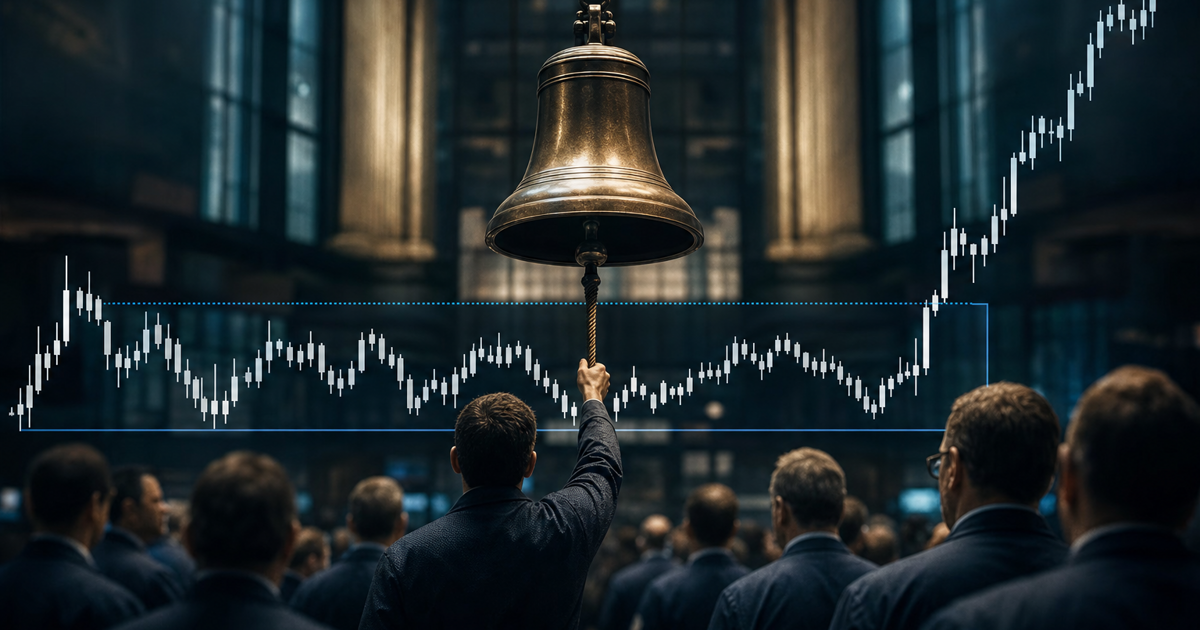
What traders mean by “opening range breakout”#
What the research actually says about ORB#
Define the setup: range, trigger, invalidation, exits#
| Component | Baseline (for a first test) | Alternatives to test next | Execution notes / sources |
|---|---|---|---|
| Session anchor | Regular session start; equities: first continuous trade; futures: product’s RTH open | Equities: use official auction print; Futures: extended hours definition for products that trade nearly 24/5 | Opening auctions and session definitions differ by venue; document your choice NYSE Opening ProcessGlossary |
| Range length (time) | First 5 minutes | 1, 3, 15, 30 minutes | Sensitivity to N is common; pre‑register N before testing Assessing the profitability of intraday opening range breakout strategies - ScienceDirectAssessing the Profitability of Timely Opening Range Breakout on Index Futures Markets |
| Trigger | Bar close beyond range | Stop 1 tick beyond range; two‑bar confirmation | Aggressive triggers demand realistic slippage modeling Index - Advances in Financial Machine Learning [Book] |
| Stop (invalidation) | Opposite side of the opening range | Close back inside range; fixed tick stop from breakout price | Keep stops mechanical and data‑available at your bar size |
| Exit | Flat by session close | Fixed time (e.g., 11:30); scale‑out + trailing close | Day‑end exit aligns with intraday studies Assessing the profitability of intraday opening range breakout strategies - ScienceDirectAssessing the Profitability of Timely Opening Range Breakout on Index Futures Markets |
| Filters | None in baseline | Gap size, volume percentile, market bias | Volume/uncertainty around the open can be informative Enhancing Intraday Momentum Prediction: The Role of Volume-Based Information Uncertainty in the Chinese Stock Market |
| Instruments | Liquid index futures (e.g., MNQ) and liquid stocks/ETFs | Sector/commodity futures with robust opens | Verify live specs (tick, hours, margins) on the exchange page Micro E-mini Nasdaq-100 Index Quotes - CME GroupGlossary |
Filters you can actually measure (and why they might help)#
- Hypothesis A (close‑break): If a bar closes above (below) the opening‑range high (low), then short‑horizon momentum persists long enough to justify entering with a hard stop at the opposite side of the range and exiting by a fixed time.
- Hypothesis B (stop‑through): If price trades 1 tick beyond the range, a stop‑entry captures early momentum; invalidate on a close back inside the range. Expect slippage and spreads to matter more than with close‑based triggers; test with conservative assumptions Index - Advances in Financial Machine Learning [Book].
- Hypothesis C (filtered): Apply Hypothesis A only when the opening‑window volume is in the top Q% of the last R sessions. Expect fewer trades and different drawdown paths; justify Q and R using out‑of‑sample tuned parameters, not in‑sample fits Enhancing Intraday Momentum Prediction: The Role of Volume-Based Information Uncertainty in the Chinese Stock MarketIndex - Advances in Financial Machine Learning [Book].
A falsifiable backtest plan you can reproduce#
- State hypotheses and parameters in advance. Example: “5‑minute opening range; bar‑close trigger; opposite‑range stop; day‑end exit; no filters.”
- Choose instruments and confirm specs. For futures, pull the live product page to record tick size, tick value, and session hours (e.g., MNQ on CME). For equities, document the venue’s auction/open definitions Micro E-mini Nasdaq-100 Index Quotes - CME GroupNYSE Opening ProcessGlossary.
- Acquire quality intraday data. Use bar sizes that match your trigger. Ensure correct time zones and corporate actions (for equities).
- Sessionize correctly. Define what counts as the open (auction vs first continuous print for equities; RTH vs ETH for futures) and exclude pre‑open/auction imbalance data unless explicitly used NYSE Opening ProcessGlossary.
- Compute the opening range per your rule. Lock in the high/low after the range window completes; do not revise it intraday.
- Implement triggers and stops with explicit fill rules. For bar‑close triggers, fill at the next bar’s open; for stop‑through triggers, simulate conservative slippage and impact consistent with product liquidity and tick size Index - Advances in Financial Machine Learning [Book].
- Model costs. Include exchange/clearing fees, commissions, and realistic slippage. Quote all returns net of these costs.
- Split in‑sample and out‑of‑sample. Use walk‑forward or cross‑validation designed for time series (purged and embargoed K‑fold / CPCV). Report out‑of‑sample separately Index - Advances in Financial Machine Learning [Book].
- Run overfitting diagnostics. Compute Deflated Sharpe Ratio and Probability of Backtest Overfitting; if you try multiple N or filter values, apply multiple‑testing controls and reality‑check logic Index - Advances in Financial Machine Learning [Book].
- Perform robustness checks. Vary bar size (1 vs 5 minutes), shift the range by ±1 minute, and stress slippage by +1–2 ticks. Re‑test across market regimes (bull, bear, high/low vol) to probe instability FRB: Finance and Economics Discussion Series: Screen Reader Version - Forecasting with Small Macroeconomic VARs in the Presence of Instabilities *.
- Publish a research log. Include code (e.g., a minimal Pandas backtest), parameter files, and a changelog. A public example ORB backtest on S&P 500 E‑mini futures can serve as a structural reference for your implementation choices GitHub - Wojtek0110/opening_range_breakout_backtest: Python/Pandas backtesting case study for an Opening Range Breakout strategy on S&P 500 E-mini futures. · GitHub.
- Define a kill switch. Pre‑specify conditions that invalidate the strategy (e.g., DSR below threshold, PBO above threshold, or 12‑month rolling net PnL below −X) and stop trading if met Index - Advances in Financial Machine Learning [Book].
Conditions where an opening‑range breakout can fail#
How to tag this setup in your journal#
FAQ#
How do I define the “open” for futures versus stocks?
CME defines opening ranges and related behaviors in its glossary and product documentation; some contracts have nearly 24/5 trading, so you must specify whether you anchor to the regular (RTH) session or another session. NYSE equities open via an auction that produces an official opening price. Your range can start from that auction print or from the first continuous trade—document it explicitly GlossaryNYSE Opening Process.
What opening‑range length (N minutes) is “best”?
There is no universally best N. Academic tests show sensitivity to the length of the opening window; profitability can vary with instrument and sample. Pre‑register a small set of N values (e.g., 1/5/15/30) and evaluate them with walk‑forward and multiple‑testing controls rather than picking the best in‑sample Assessing the profitability of intraday opening range breakout strategies - ScienceDirectAssessing the Profitability of Timely Opening Range Breakout on Index Futures MarketsIndex - Advances in Financial Machine Learning [Book].
Does the opening‑range breakout strategy work on MNQ?
A 2026 falsification study on MNQ (2021–2025) found that no OHLCV intraday signals, including ORB, passed strict institutional criteria with realistic costs and validation. That does not prove ORB cannot work elsewhere, but it does show how easily an apparent edge can disappear under realistic testing Structural Limits of OHLCV-Based Intraday Signals in MNQ Futures: A Systematic Falsification Study.
Should I use stop orders beyond the range or wait for a bar close?
Close‑based triggers simplify fills (enter next bar’s open) but risk missing early momentum; stop‑through triggers capture the first tick beyond the range but are more exposed to slippage and spread. Model execution conservatively and compare both approaches using the same validation framework Index - Advances in Financial Machine Learning [Book].
What filters have some evidence behind them?
You can test volume percentile gates, gap size thresholds, or market‑bias conditions. Evidence suggests opening‑period volume and information uncertainty sometimes correlate with short‑horizon momentum, but filters increase data‑snooping risk. Use purged/embargoed CV, DSR, and PBO to avoid overfitting Enhancing Intraday Momentum Prediction: The Role of Volume-Based Information Uncertainty in the Chinese Stock MarketIndex - Advances in Financial Machine Learning [Book].
Do I hold ORB trades overnight?
Treat this as an intraday idea by default: flat by a fixed cutoff or the closing bell. Many studies implement day‑end exits to keep risk bounded within a session; if you test overnight holds, state the rationale and adjust risk controls accordingly Assessing the profitability of intraday opening range breakout strategies - ScienceDirectAssessing the Profitability of Timely Opening Range Breakout on Index Futures Markets.
Sources#
- Micro E-mini Nasdaq-100 Index Quotes - CME Group — cmegroup.com
- FRB: Finance and Economics Discussion Series: Screen Reader Version - Forecasting with Small Macroeconomic VARs in the Presence of Instabilities * — federalreserve.gov
- NYSE Opening Process — nyse.com
- Glossary — cmegroup.com
- SUBMISSION COVER SHEET — cmegroup.com
- CME Exchange Members_04.02.26.xlsx — cmegroup.com
- Special Executive Report — cmegroup.com
- Assessing the profitability of intraday opening range breakout strategies - ScienceDirect — sciencedirect.com
- Structural Limits of OHLCV-Based Intraday Signals in MNQ Futures: A Systematic Falsification Study — arxiv.org
- Opening Range Breakout: What 142,348 Trades Actually Show | TrueTrader — truetrader.net
- Assessing the Profitability of Timely Opening Range Breakout on Index Futures Markets — researchgate.net
- GitHub - Wojtek0110/opening_range_breakout_backtest: Python/Pandas backtesting case study for an Opening Range Breakout strategy on S&P 500 E-mini futures. · GitHub — github.com
- Opening Range Breakout - Swing and Day Trading - Wiley Online Library — onlinelibrary.wiley.com
- UES.pdf — econ.umu.se
- Index - Advances in Financial Machine Learning [Book] — oreilly.com
- Enhancing Intraday Momentum Prediction: The Role of Volume-Based Information Uncertainty in the Chinese Stock Market — mdpi.com
KEEP READING

Backtesting8 min read
Manual vs automated backtesting: choose by hypothesis
Manual vs automated backtesting isn’t a rivalry. Match your method to your hypothesis, controlling bias, timing, execution, and reproducibility.
Read post
Journaling10 min read
Turn your best trades into a trading playbook
Turn recurring journal tags into explicit setup cards, review them on a spaced schedule, and backtest with controls to avoid overfitting.
Read post
Backtesting8 min read
How many trades does a backtest need?
There’s no magic trade count. Learn how to size a backtest for confidence, cover regimes, and avoid false certainty using sample‑size math and validation steps.
Read post